Modules
Start with one module. Add the next when it has earned its place.
Thirty-eight modules sit in the platform, and these fifteen each run on their own. You can take one, against your own properties and your own documents, without the rest of it. Most groups do exactly that, then add a second once the first has proved itself. Nothing is migrated when the second arrives, because both were always on the same record, and the two together answer questions neither could answer alone.
The fifteen
- Certificates and compliance
- Every statutory certificate for every property, what is held, what is missing, what expires when, and the contractor and site safety records that go with it.
- Facilities management
- Fault reporting, job assignment, quotes, planned maintenance, contractors, and what is out of use today.
- Operator performance
- Monthly KPIs and profit and loss by home, against budget and against last year, with occupancy, agency and fee analysis underneath.
- Leases
- Every lease, its clauses, dates, rent mechanics and obligations, with the documents behind them.
- Lease accounting (IFRS 16)
- Right-of-use assets, lease liabilities, the unwind, remeasurement and disclosure.
- Insurance
- Policies, schedules, reinstatement assessments, renewals and claims.
- ESG and sustainability
- Energy, water and waste performance, carbon, EPC and MEES position, improvement plans.
- Demand and demographics
- Catchment population, projections, competitor supply, planning pipeline and net need.
- Desktop valuations
- Trading based valuation on the profits method, with comparables and sensitivity.
- Acquisitions
- Pipeline, appraisal, due diligence, conditions precedent and conveyancing to completion.
- Development and construction
- Appraisal, programme, drawdowns, cost to complete, site records and handover.
- Covenants and debt
- Covenant definitions and headroom, with the facilities, maturities, margins, hedging and drawdowns underneath them.
- Capital planning
- Condition, component lifecycles, the five year plan and capital requests.
- Fund administration
- Vehicles, investors, capital calls, distributions and capital accounts.
- Reporting and portals
- Board, IC and investor packs, and the portals that external parties see.
The five in green have a page of their own. The rest are built and running; ask and we will show you any of them on the demonstration portfolio.
What a second module adds
One module does a job. Two of them answer questions neither could answer alone.
Every module here is a complete piece of software on its own terms. What changes when a second goes on is not that the first gets better. It is that a question which used to sit between two systems stops sitting between anything.
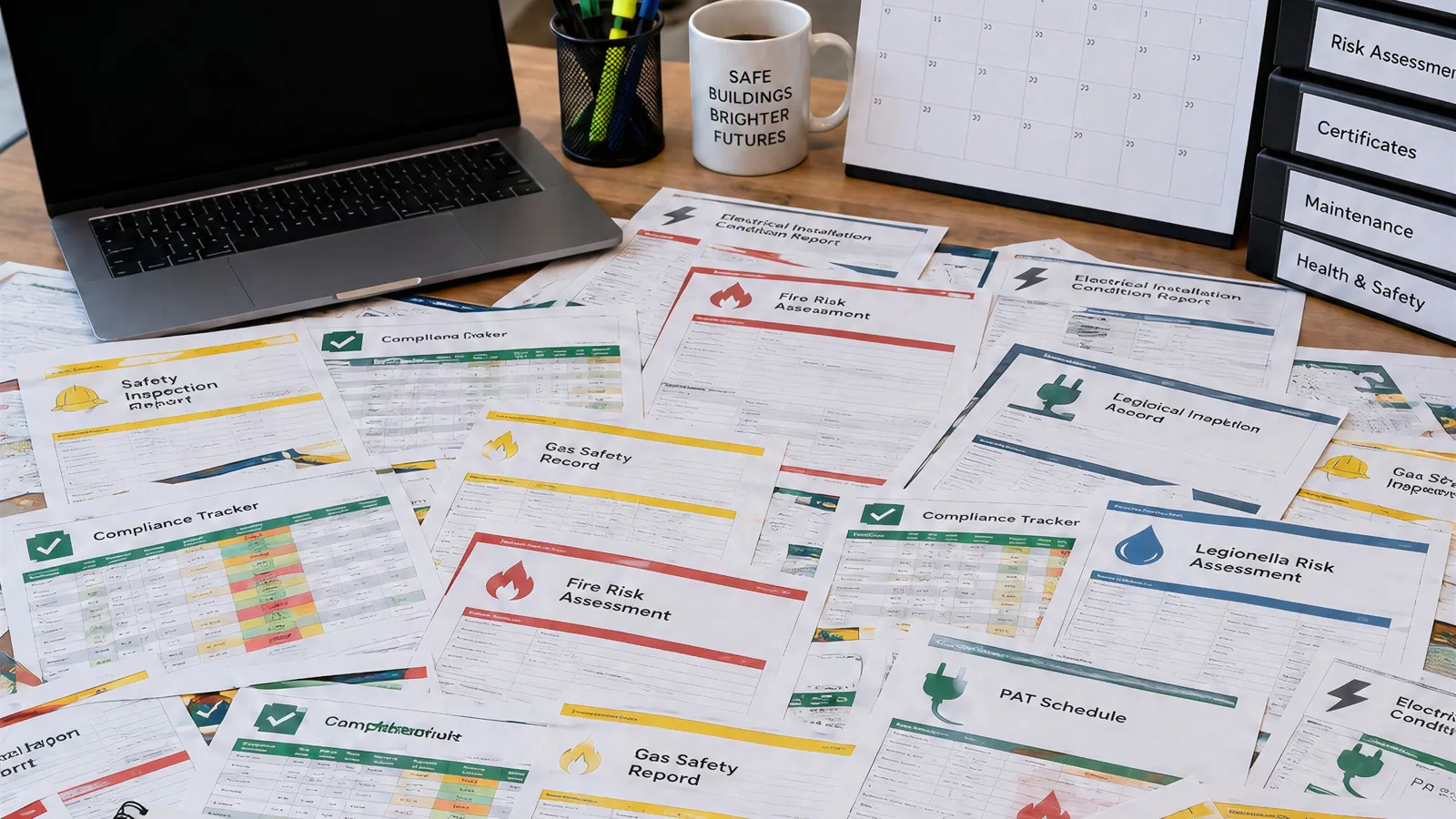
Certificates and compliance, then facilities management
On its own, certificates runs the compliance calendar for the whole portfolio. Every statutory certificate held against the property it belongs to, what is missing stated as plainly as what is held, the next inspection booked and the right person told it is booked, the remedial actions carried as dated work, and every contractor’s own insurance and DBS sitting beside their record. One person can run compliance across thirty properties with it.
Add facilities management and the building work and the compliance it creates become one piece of work instead of two trails. A refurbishment or a new hoist in a bathroom brings its own certification requirements with it, so the tender goes out already carrying them. When the work finishes, the inspection is booked and the approval recorded against the room rather than emailed to somebody. The contractor on site was cleared before they were sent, because the record that assigns the job is the record that holds their cover.
Facilities management, then operator performance
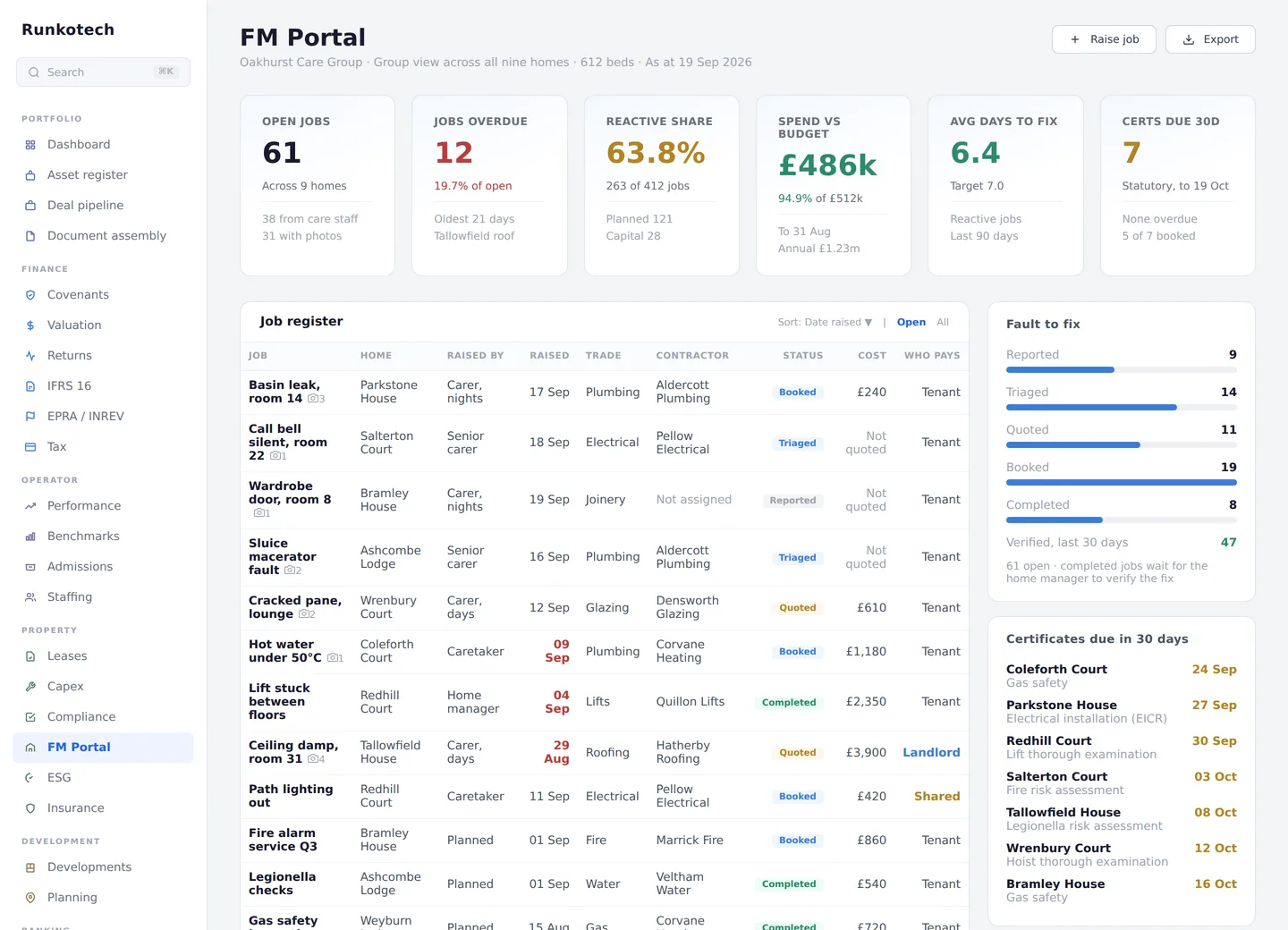
On its own, facilities management runs the estate. Every fault, job, quote, planned maintenance task, contractor and cost across every property. Care staff report a fault by emailing a photograph. Jobs are assigned, quoted and tracked to completion, and you can say what is out of use this morning, in which home, and since when.
Add operator performance and every one of those jobs acquires a value. The room that is out of use carries what the void costs a week alongside what the repair costs, so the decision to do the work has both numbers on it rather than one. The home manager sees the completion date, which means admissions can start filling the room before it is ready instead of finding out when it already is.
Development and construction, then demand and demographics
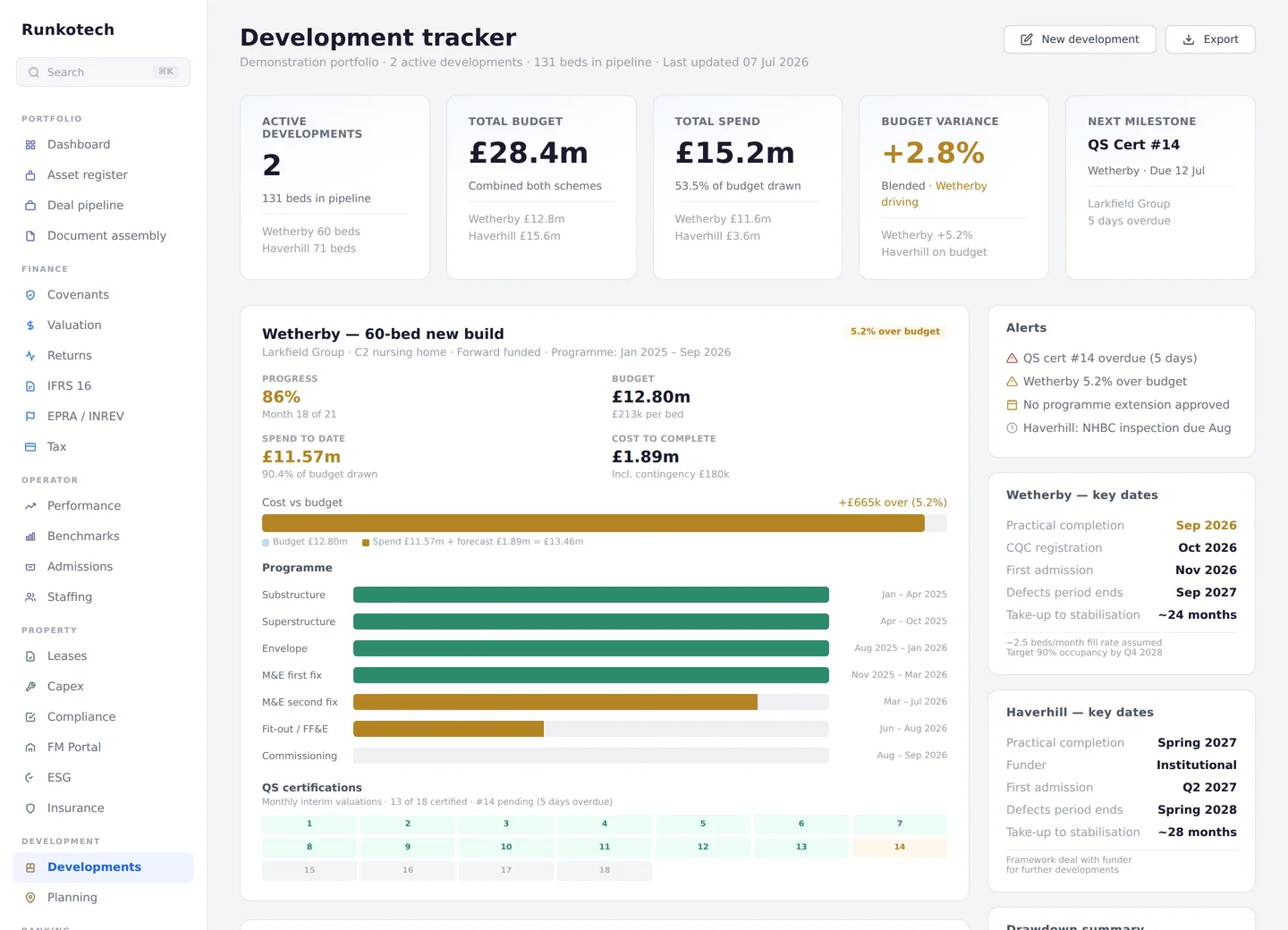
On its own, development keeps the appraisal alive. Programme, drawdowns, cost to complete re-estimated monthly rather than inferred from spend, variations held with their cause, site records and the handover. The appraisal stops being a spreadsheet frozen at the investment decision and becomes the thing the scheme is actually run against.
Add demand and demographics and the front of the deal joins the back of it. The catchment evidence, the achievable fee and the net need become the single basis the appraisal, the planning case and the development facility are all built on, rather than three pieces of work that have to be reconciled afterwards. Add the take-up period and stabilisation and the scheme runs on one continuous record from the day the site was bought to the day the home is trading at a settled level. Most software hands that over three times and loses the assumptions at every handover.
And every one of these modules takes its data by email. You copy the module in, it reads what you sent, files it against the right property and updates the register itself. Nothing is rekeyed, your homes log into nothing, and nobody has to learn a new habit.
Which module should you start with?
Two answers, depending on what is bothering you. Certificates and compliance if the problem is that nobody can say what is expiring across the portfolio: above five care homes nobody holds it in their head, and the arithmetic proves itself inside a week. Insurance if you want the argument that is hardest to dismiss: it needs no building work, no new system and nobody else’s agreement, just the policy schedule and the last reinstatement assessment.
Five sites or more?
Start with one module, or one part of the platform, set up around your own reporting cycle rather than a demonstration. Yours, not ours.